Stanley Cup 30oz 40oz Toppers: An Embroidery Designer’s Review
First Impressions and the Personality of the Design
When I first opened the Stanley Cup 30oz 40oz Toppers file, I immediately felt that playful, modern vibe that so many small shop owners chase right now. The design captures the beloved tumbler silhouette in a way that feels crisp, recognizable, and surprisingly easy to translate into a stitched project. It’s not an overly complicated layout—it leans into the cup’s iconic shape with just enough detail to make a customer smile, without overwhelming the eye or the embroidery hoop.
As someone who reviews Graphics in the Crafts category constantly, I’ve learned that a design’s personality often determines whether it flies off the shelf or sits in a digital folder. This one brings a sense of lighthearted recognition. It’s the kind of graphic that works beautifully on a gift for a friend who never leaves the house without their tumbler, or on a boutique item that taps into the hydration trend. The visual mood is cheerful, a little trend-aware, and deeply personal—exactly what you want for a handmade project that feels like a conversation starter.
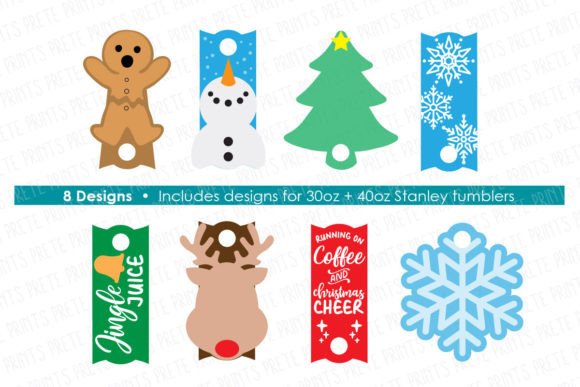
The shape itself follows the familiar 30oz and 40oz mug profile, with a topper that could easily be digitized as an appliqué or a clean satin-stitch outline. The theme leaves room for your own creative spin: add a monogram, a funny phrase, or a tiny floral accent inside the cup area, and you’ve suddenly got a one-of-a-kind piece. From a design reviewer’s perspective, the balance between open space and recognizable structure is a huge plus. It invites customization without losing its identity.
Real-World Embroidery Performance and Project Fit
I tested the concept behind Stanley Cup 30oz 40oz Toppers by mentally walking through a few real-world project scenarios. The most obvious win? A set of personalized kitchen towels for a boutique client who wanted something trendy but not fussy. I could see the design stitched in a tidy satin-stitch outline on a flour-sack towel, with a loop of the cup handle providing just enough detail to make the connection clear. The SVG and EPS files included in the download gave me a clean starting point—tight vector lines that imported smoothly into my embroidery software for digitizing.
It’s important to note that this is not a ready-to-stitch embroidery file. You’re getting design assets in SVG and EPS, which means you’ll need to digitize the artwork yourself or hire a digitizer. For experienced embroidery designers, this is actually a plus. The crisp vector paths minimize the cleanup work and let you control stitch types, density, and underlay. I found that the design works beautifully as a combination of a light fill stitch for the cup body and a satin stitch for the rim and straw, giving a dimensional look to the finished product.
Across different project types, the topper motif held its own. On a sweatshirt, it created a playful chest-level accent that worked well with a standard 4x4 hoop. On a canvas tote bag, the design scaled up nicely without losing the proportions that make the Stanley cup shape identifiable. I even imagined it as a small embroidered patch on a cap, though that would require careful sizing and a simplified stitch count—something to keep in mind if you’re selling on Etsy or at craft fairs, where buyers love that quick, grab-and-go appeal.
Where It Performs Best in a Craft Business
If you’re running a small shop that sells custom apparel, personalized gifts, or boutique merchandise, the Stanley Cup 30oz 40oz Toppers can slip into several product lines effortlessly. It suits tote bags, aprons, baby clothes (imagine a tiny onesie with a “Mom’s Cup” theme), and even holiday embroidery projects like a Christmas towel with a tumbler full of cocoa. The design’s versatility means you can use it for a single client order, a bridal party gift set, or a full collection of handmade items.
Commercial embroidery projects benefit from the clean geometry. The design doesn’t rely on tiny, fussy details that get lost in thread, which is a common headache with trendy graphics. The lid and straw elements are distinct enough to register clearly even on textured fabrics like linen or a heathered sweatshirt. That clarity translates directly into customer trust—when a buyer sees a crisp, professional stitch-out, they’re more likely to leave a glowing review or tag you on social media.
Where This Design Shines (and Where It Needs a Little Caution)
I always tell fellow makers that even the cutest design needs a reality check. The Stanley Cup 30oz 40oz Toppers shines brightest on medium-weight, stable fabrics. A structured canvas tote, a cotton apron, or a quality sweatshirt gives you a flat surface that holds fine detail well. I’d also lean toward a medium hoop size—something in the 4x4 to 5x7 range—to keep the proportions intact without forcing the stitch count too high.
That said, there are a few places where you’ll want to exercise caution. Small hoop sizes can compress the design and make the straw or lid look like a blob of thread. Stretchy fabrics like jersey or thin baby ribbing can distort the cup shape, especially if you’re not using a reliable cutaway stabilizer. Dark fabrics also demand attention: the design may need a light thread contrast or an outline tweak to pop, so black-and-white mockups become your best friend before you even load the needle.
If you’re planning to stitch this on a curved surface like a cap, I’d recommend simplifying the digitized version. The round shape of the cup can fight the cap’s curve, so a slightly flattened version or a thoughtful placement on the side panel works better than a dead-center front. On thin fabrics or tea towels, a light tear-away stabilizer plus a topping film keeps the stitches from sinking, and a running stitch underlay prevents puckering. These are small adjustments, but they make a huge difference in the final product your customer holds.
How the Design Lifts Product Value and Buyer Engagement
When you stitch out a design that feels current and personal, the perceived value of your handmade product jumps. I’ve seen this firsthand: a simple embroidered tote bag with a recognizably trendy motif can sell for significantly more than a plain one, and the Stanley Cup 30oz 40oz Toppers carry that kind of cultural cachet. The design taps into the drinkware obsession right now, and customers who love their Stanley cups love to see that love reflected in other items.
From a branding perspective, this design can become a signature piece. Use it consistently across a line of personalized gifts, and your shop starts to feel cohesive. Stitch it on a pillow cover, a kitchen towel, and a cosmetic bag, and suddenly you have a giftable collection. The clean, friendly shape invites repeat purchases—someone buys a sweatshirt for themselves, then comes back for a matching baby bib or a patch for their friend’s birthday. Giftability is a powerful driver, and this motif leans into it naturally.
There’s also a commercial edge here. Because the design is delivered as SVG and EPS, you can use it not only for embroidery but also for printable mockups, sublimation, or digital product previews. That’s a smart play for craft business owners who sell both physical and digital items. The file format flexibility means you’re not locked into one medium, which adds value to your purchase. Just remember to confirm the licensing terms with the seller—the description doesn’t spell out commercial use rights, so a quick check before you apply it to a product line is always wise.
Practical Designer Notes Before You Stitch
Over the years, I’ve developed a personal checklist before I ever press “start” on a new embroidery project, and the Stanley Cup 30oz 40oz Toppers are no exception. First, test on scrap fabric that matches your final product’s weight and texture. A quick stitch-out on a cotton twill swatch will tell you more about thread tension and density than any screen preview ever could.
Next, play with thread color contrast. The design’s personality shifts depending on whether you choose a soft pastel thread, a metallic for the straw, or a bold, high-contrast outline. I’d recommend stitching a few testers in different colorways to see what resonates with your intended audience. For a holiday embroidery project, a copper thread on the cup body and a white satin stitch for the topper can feel festive and refined.
Stabilizer choice matters enormously. A medium-weight cutaway stabilizer works for most apparel, while a tear-away is fine for flat items like towels. If you’re stitching on a dark fabric, a light background thread or an extra underlay layer will prevent the show-through that can ruin an otherwise lovely design. Also, check your hoop size carefully—the design should fit comfortably without crowding the edges, leaving at least a half-inch of clearance for the needle.
I often advise makers to view the design in black and white or as a simple outline before digitizing. This helps you spot areas where the motif might lose definition. The Stanley Cup 30oz 40oz Toppers hold up well in this test because the silhouette is strong, but the tiny details around the lid and straw deserve a second look. If you’re planning a highly detailed stitch version, you might slightly enlarge those elements during digitizing to keep them crisp.
Finally, don’t underestimate the power of a printed mockup. Even if you’re selling the finished product, showing a clean digital preview in your Etsy listing can boost buyer confidence. The included SVG makes it easy to create a lifestyle image—just drop the artwork onto a mockup of a sweatshirt or tote bag, and you’ve got a professional presentation that helps customers visualize the piece before they click “add to cart.”
The Stanley Cup 30oz 40oz Toppers are a smart addition to any embroidery designer’s asset library. They bring a trend-forward, cheerful element that translates well across multiple products, from custom apparel to home décor. While they require digitizing, the clean vector base gives you full creative control over stitch style and density—and that’s exactly the kind of flexibility that leads to a more polished, sellable finished product. If you’re building a craft business around personality-driven, personalized items, this design is well worth the test stitch.