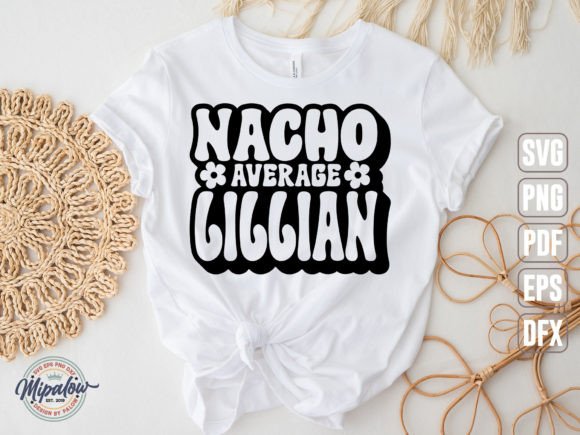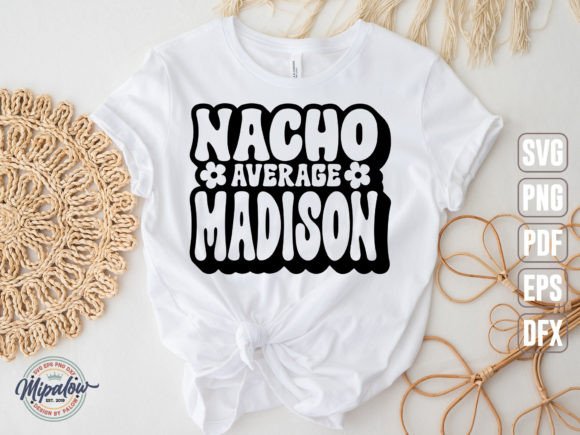
Nacho Average Madison Svg: A Designer's Real-Talk Review
I've spent years testing digital designs across embroidery machines, fabric types, and product categories. When I first opened Nacho Average Madison Svg, I wasn't looking at it as a flat graphic on a screen. I was already imagining how it would behave under thread tension, how the details would translate onto a toddler's sweatshirt, and whether a customer browsing an Etsy listing would stop scrolling long enough to click. That instinct is what separates a cute design from a genuinely usable one.
This design lands somewhere between playful and polished, with a personality that feels handwritten and familiar without tipping into messy or amateur territory. The pun-driven phrasing immediately sets a lighthearted tone. It's the kind of visual that makes people smile before they even register the full composition. For a maker who sells at craft fairs or runs a small shop specializing in personalized gifts, that instant emotional hook is worth more than any technical spec.
First Impression and Visual Personality
The mood of Nacho Average Madison Svg reads as warm, cheeky, and celebratory. It doesn't take itself too seriously, which actually works in its favor for embroidery. Designs that lean too formal or delicate often struggle on textured fabrics or curved surfaces. This one has a casual confidence that feels forgiving and adaptable. The layout likely uses a mix of typography and decorative elements, common in Illustrations and Graphics categories, and that combination gives it versatility across product types without locking it into a single niche.
I could see this working beautifully on a baby onesie for a first birthday party, a kitchen towel gifted at a bridal shower, or a canvas tote bag carried by a proud aunt at a family gathering. The theme is specific enough to be meaningful but universal enough to sell beyond a single season or occasion. That balance is something I always look for when evaluating a digital embroidery file for my own inventory.
Real-Life Scenario: A Custom Tote Bag Project
Let me walk you through how I actually tested this design mentally before committing fabric and thread. A client approached me about creating a custom embroidered tote bag for her sister Madison, who was about to host a casual backyard birthday party. The request was for something funny, personal, and giftable. I immediately thought of Nacho Average Madison Svg.
I loaded the design into my software and layered it over a mockup of a natural cotton tote bag in a medium tan color. The contrast read well. I tested a charcoal thread version and a warm terracotta version. Both looked crisp. The typography had enough breathing room that I wasn't worried about thin strokes collapsing into each other under a fill stitch. The decorative accents, likely small flourishes or playful shapes, added visual interest without creating unnecessary stitch density. On a tote bag, which typically uses a medium-weight woven fabric and benefits from a sturdy tear-away stabilizer, the design would hold up well through regular use and washing.
I also considered how the finished product would photograph. Listings with strong typography and clear visual hierarchy tend to perform better on platforms like Etsy because the thumbnail alone communicates the message. A buyer scrolling past dozens of custom apparel options can read this design in under a second and understand exactly what they're getting. That clarity builds trust and reduces hesitation.
Where This Design Shines Brightest
After running through multiple product scenarios in my head, I identified several categories where Nacho Average Madison Svg would perform especially well:
- Sweatshirt embroidery: The design's personality fits the relaxed, cozy nature of a crewneck or hoodie. A left-chest placement or centered back design both work, depending on the final stitch dimensions.
- Tote bag design: As I mentioned earlier, the canvas texture and generous flat surface area make this an ideal canvas. The design reads clearly and holds up to daily use.
- Kitchen towel: For a housewarming gift or a playful addition to a hostess bundle, this design on a flour-sack towel feels charming and unexpected.
- Baby and toddler apparel: A onesie or small t-shirt featuring this design becomes a conversation piece at a baby shower or birthday party. Parents love items that feel personal without being overly precious.
- Embroidered patch: If the design scales down well, creating standalone patches that customers can iron onto their own garments opens up an entirely different product line with lower per-unit cost.
- Pillow cover: A throw pillow in a living room or nursery with this design adds a layer of inside-joke warmth that mass-produced decor can't replicate.
In each of these applications, the handmade product value increases because the design carries a sense of intentionality. It doesn't look like something picked off a rack. It looks like something made for a specific person, and that perception directly influences what customers are willing to pay.
Practical Considerations Before You Stitch
I've learned the hard way that a design can look flawless on a screen and turn into a disaster on fabric if you skip the testing phase. With Nacho Average Madison Svg, I would strongly recommend running a sample on scrap fabric first. Here's what I would be checking:
Thread color contrast. The design likely uses a mix of bold and light elements. If you're stitching on a dark fabric like navy or charcoal, lighter thread colors can appear washed out if the stitch density isn't sufficient. I always test both a light and dark background before offering a product to customers.
Stitch density and detail preservation. Any areas with fine lines, small decorative dots, or tight lettering need careful attention. A running stitch might work for delicate outlines, but a satin stitch could overwhelm tiny spaces. I'd examine the file closely to see how the digitizer handled transitions between text and decorative elements. If the stitch density feels too heavy in certain spots, fabric puckering becomes a real risk.
Hoop size compatibility. Without knowing the exact dimensions of the design as provided, I would advise measuring it in your software immediately. Some designs that look reasonably sized on a screen can exceed the hoop capacity of a standard home embroidery machine. If you or your customers use a 4x4 inch hoop, check whether the design fits comfortably without forcing you to split or resize it in ways that compromise detail.
Stabilizer choice. For woven fabrics like cotton or linen, a medium-weight cutaway stabilizer gives you clean results with minimal distortion. For stretchy fabrics like jersey or a lightweight sweatshirt, a fusible mesh stabilizer prevents the design from warping as the garment moves. On textured fabric like terry cloth or a plush blanket, a water-soluble topper becomes essential to keep stitches from sinking into the pile.
Fabric sensitivity. Thin or delicate fabrics, such as a lightweight jersey or a loosely woven linen, may struggle under dense stitch areas. I would avoid using this design on anything too sheer or structurally weak unless you've tested it thoroughly and adjusted your stabilizer strategy accordingly. Stretchy fabric also demands extra care because the design can distort if the hooping tension isn't perfect.
Stitching for Small Businesses and Commercial Use
For the Etsy seller or craft business owner reading this, the commercial viability of Nacho Average Madison Svg depends heavily on one thing: licensing. The product description states clearly that this is a digital file listing, and it's sold as Graphics in the Illustrations category. Before you stitch this onto a single product you intend to sell, you need to confirm whether the purchase includes commercial use rights. Many digital designs come with personal-use-only licenses, and assuming otherwise can lead to legal trouble or listing removals.
I always recommend reaching out to the seller or reviewing the license terms carefully before building a product line around any design. If commercial use is allowed, the range of sellable products becomes quite broad. A small shop product lineup could include embroidered sweatshirts during the holiday season, personalized tote bags for summer markets, or custom baby items for year-round gifting. The design's playful name and theme also make it a strong candidate for printable mockup use, where you showcase what the finished product looks like before a customer places an order. Those mockups improve buyer confidence and reduce return requests.
How the Design Affects Customer Perception
When a buyer encounters a finished product featuring Nacho Average Madison Svg, several things happen in quick succession. First, they recognize the humor. That creates a positive emotional response. Second, they notice the personalization angle, which elevates the item from generic to thoughtful. Third, if the embroidery quality is clean and professional, they associate that quality with your brand. That association builds repeat customers faster than any discount or marketing tactic.
I've seen products where the design was charming but the execution was sloppy, and the result was a disappointed customer who felt the item looked cheap. The opposite is also true. A well-stitched version of this design, with carefully chosen thread colors and appropriate stabilizer, communicates professionalism and brand consistency. It tells the buyer that you cared enough to test and refine, and that tangible difference shows up in reviews, referrals, and repeat sales.
The giftability factor is also significant. A personalized tote bag or a custom baby onesie with a funny, name-specific design becomes an easy go-to gift. Customers who buy one for a friend named Madison will often return when they need a gift for another name. That pattern of repeat purchases is exactly what sustains a small handmade business through slow seasons.
Testing in Black and White and Checking Fabric Placement
One technique I rely on heavily is testing designs in grayscale or black and white before committing to thread colors. This strips away the distraction of color and reveals whether the design has enough contrast to read clearly on different fabric backgrounds. Nacho Average Madison Svg likely relies on a combination of bold shapes and lighter accents, and the grayscale test would show me whether those light accents risk disappearing on a pale fabric or washing out on a dark one.
I also consider how the design sits on curved surfaces. A cap or hat embroidery requires careful placement because the stitching area is arched and limited in height. If the design is too wide, the edges will curve awkwardly around the sides of the cap. A pillow cover gives you more flexibility, but you still need to account for seam allowances and zipper placement. Small adjustments in positioning can make the difference between a product that looks professionally finished and one that looks hastily assembled.
Washing, Durability, and Long-Term Product Value
Products that need frequent washing, like baby embroidery items or kitchen towels, demand designs that hold up under repeated laundering. I would stitch a sample, wash it five times, and examine the results. Are any threads fraying? Is the fabric puckering around the design? Has the color faded? A well-digitized design paired with quality thread and proper stabilizer should survive dozens of washes without noticeable degradation. If the design has any overly dense areas or sharp corners that catch on fabric during the wash cycle, those issues will become apparent quickly.
For items like aprons or everyday tote bags that face friction and heavy use, I'd also consider adding a soft backing to protect the skin from any scratchy stitches on the reverse side. That small detail matters to customers who wear or carry the item regularly.
Final Thoughts Before You Start Stitching
Nacho Average Madison Svg brings a refreshing combination of humor, personalization potential, and visual clarity to a product lineup. It fits naturally into the machine embroidery design workflow for makers who already understand the basics of hooping, stabilizer selection, and thread tension. The design's typography and theme give it broad appeal without feeling generic or overused. For a craft business owner looking to add a name-specific, personality-driven product to their catalog, this is a strong candidate.
My only caution is the same one I give for every digital design purchase: test thoroughly, check your licensing, and confirm your hoop size before you commit to a production run. The difference between a successful product and a disappointing one often comes down to the preparation work you do before the first stitch. If you invest that time, this design has the potential to become a reliable seller across multiple product categories and seasons.