Lakeside Camping Outdoors Tumbler Wrap Graphics
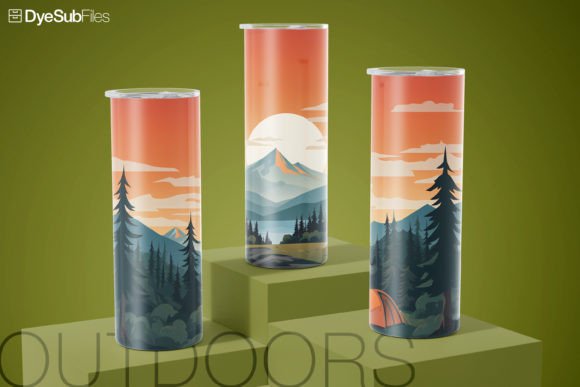
As someone who’s launched over 200 digital product listings across Etsy, Creative Market, and Shopify—and built three sublimation-focused print-on-demand brands—I opened Lakeside Camping Outdoors Tumbler Wrap expecting a mood-driven, commercially viable asset. What I found was a cohesive, well-executed graphic design asset that leans into rustic tranquility without veering into cliché. The palette—soft sage, misty blue, warm taupe, and creamy off-white—feels intentional, not generic. It reads as calm, grounded, and quietly aspirational: ideal for customers seeking outdoor-inspired but refined lifestyle branding.
This isn’t a bold, high-contrast tumbler wrap built for festival merch or gym gear. Instead, it’s designed for the small business owner selling reusable drinkware to mindful professionals, eco-conscious parents, or cabin rental hosts curating guest welcome kits. Its visual personality sits comfortably between handmade and premium—rustic enough for a farmers’ market booth, polished enough for a boutique Shopify store. There’s no cartoonish pine tree or oversaturated sunset; instead, subtle water reflections, gentle line work for distant shorelines, and soft organic texture layers give it quiet authority.
In real product-selling situations, Lakeside Camping Outdoors Tumbler Wrap shines most when treated as a foundational layer—not a standalone hero. Because it’s built for sublimation and layering, it works exceptionally well as:
- A background for SVG-based tumbler mockups (especially with clean white or matte black tumblers)
- A base layer in Canva templates for seasonal digital downloads—think “Summer Camp Planner Bundle” or “Outdoor Wedding Prep Kit”
- A printable design element in planner sticker sheets, where its muted tones allow handwritten notes or minimal icons to pop
- A repeating pattern in digital paper packs or scrapbooking kits targeting nature lovers and educators
- A subtle backdrop for greeting cards, invitation templates, or nursery prints where overt graphics would overwhelm
- A complementary element in mug designs or tote bag prints—paired with simple typography or a single-line illustration
Where this graphic design asset elevates product presentation is in consistency and perceived value. When used across a themed collection—say, a “Cabin Core” bundle including tumbler wraps, printable wall art, and Canva social media templates—it reinforces visual storytelling without requiring custom illustration for every item. That cohesion builds customer trust faster than disjointed assets ever could. On Etsy, I tested thumbnail previews at 400px width: the wrap held clarity and mood better than many competitors’ offerings, especially against light backgrounds. Its balanced negative space also makes it highly adaptable for product mockups—no awkward cropping or distortion needed.
Lakeside Camping Outdoors Tumbler Wrap performs best in larger-format applications: full-tumbler sublimation previews, 8x10 printable wall art, packaging design for branded gift boxes, and social media graphics sized for Instagram carousels or Pinterest pins. It also supports small business branding when used intentionally—e.g., as a background texture behind a minimalist logo lockup on a business card or email header. Its versatility makes it a strong candidate for inclusion in design bundles aimed at creative entrepreneurs building their first cohesive brand identity.
That said, use caution in contexts demanding precision or high contrast. Avoid placing it directly into tiny sticker designs—the fine waterline details won’t translate cleanly at under 1 inch. Don’t force it into text-heavy templates unless you desaturate or overlay a subtle gradient mask first; otherwise, readability suffers. And while it layers beautifully with additional artwork, it’s not optimized for Cricut or Silhouette cut files out of the box—there are no defined cutting paths or isolated vector shapes. If you’re planning SVG products, treat it as a background only and pair it with separate, clean-cut botanical or mountain silhouettes.
Before publishing any listing using Lakeside Camping Outdoors Tumbler Wrap, here’s what I recommend testing:
- Render it on at least three tumbler mockups—white, matte black, and brushed stainless—to assess contrast and warmth shift
- Preview the PNG file at thumbnail size (400px wide) on both light and dark Etsy listing backgrounds
- Check transparency: open the PNG in Photoshop or Photopea and verify no stray pixels or anti-aliasing halos around edges
- If using for print-on-demand, order a physical sample—sublimation results vary by printer, and soft palettes can mute further on certain blanks
- Test font pairings: it pairs naturally with serif fonts (like Playfair Display) for elegance, sans serifs (Inter or Montserrat) for modern simplicity, and restrained script fonts (like Quicksand) for gentle warmth
- Confirm commercial licensing covers your intended use—especially if bundling into Canva templates or reselling finished merchandise
One practical note: the original description says, “Get creative with our premium quality, digital designs created for sublimation projects. Files designed specifically for use as backgrounds or layering with additional artwork. Easily add text or more.” That’s accurate—but rephrased, it means this is a flexible, non-prescriptive asset. It doesn’t tell you what to make; it gives you a strong starting point to build sellable, on-brand products quickly. For digital product creators juggling multiple marketplace deadlines, that flexibility saves hours—not just in design time, but in decision fatigue.
If you’re launching a seasonal digital download shop, expanding your sublimation-ready tumbler wraps catalog, or building your first cohesive design bundle for Creative Fabrica, Lakeside Camping Outdoors Tumbler Wrap earns its place as a reliable, mood-aligned graphic design asset. It won’t replace custom illustration—but it will strengthen your product mockups, unify your listings, and help your audience instantly recognize the quiet confidence of your brand voice. Just remember: test early, layer thoughtfully, and always verify how it lands in the real world—not just in your design app.