Hedgehog with Watermelon Tumbler Wrap: A Stitcher’s Honest Review
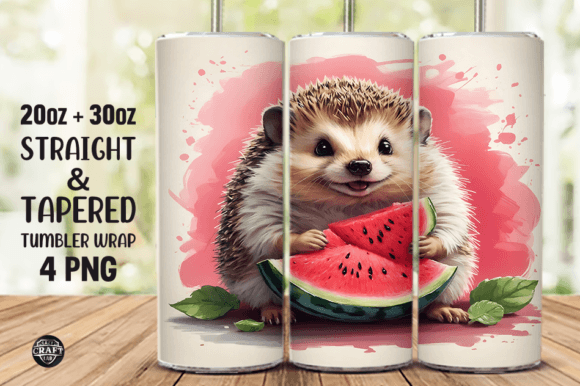
When I first opened the Hedgehog with Watermelon Tumbler Wrap design file, a smile crossed my face. It’s one of those whimsical, instantly charming graphics that feels like a little summer story. The hedgehog, with its tiny paws and curious expression, is cradling a slice of watermelon that’s almost bigger than its body. The composition is playful, and the seed details on the watermelon add a lovely rhythmic pattern. For a second, I forgot I was looking at a sublimation PNG and started mentally mapping out what this design would look like as a finished embroidery piece.
Now, this is a graphic intended for tumbler wraps, specifically Skinny Tumbler Sublimation Design 20oz 30oz. But as an embroidery designer who regularly pulls inspiration from all kinds of digital art, I immediately saw its potential for stitched projects. The article you’re reading is my honest, hands-on take on whether this design translates into a real-world embroidery project, how it would behave on fabric, and what kind of stitch work it would demand. I’m not just reviewing a file; I’m picturing the final product in a customer’s hands, at a craft fair, or in a small shop window.
First Impressions: The Mood and Visual Personality
The Hedgehog with Watermelon Tumbler Wrap design carries a gentle, nostalgic summer vibe. It’s not overly cartoony, nor is it too realistic. The hedgehog’s spines are simplified into soft, rounded shapes, and the watermelon slice has a hand-drawn quality that feels approachable and warm. This is the kind of visual that appeals to both children and adults. It whispers picnic afternoons, garden parties, and cozy handmade baby gifts. The layout is horizontal, which makes sense for a tumbler wrap, but as an embroidery designer, I immediately noted that the elongated shape would need careful resizing if I want to fit it into standard hoop dimensions.
The detailing is clean. The watermelon rind has a gentle curve, the seeds are distinct, and the hedgehog’s face is expressive without being cluttered. This level of detail is crucial for embroidery. Too many tiny elements, and you risk thread breaks or a muddy stitch-out. Here, the balance feels right. The design has enough personality to catch a buyer’s eye, but it’s not so intricate that it would overwhelm a satin stitch or require absolutely massive hoop real estate.
A Real Project Scenario: The Summer Tote That Almost Happened
Let me walk you through a practical scenario. Last week, I was planning a line of custom embroidered tote bags for a local boutique’s summer collection. The theme was “fresh and playful,” and I needed a design that would work on natural canvas, look polished after stitching, and photograph beautifully for an Etsy listing. I came across the Hedgehog with Watermelon Tumbler Wrap and thought, “This could be the one.”
I tested the concept by pulling the PNG into my embroidery software and creating a quick digitized preview. The first thing I noticed was the aspect ratio. Because it’s designed for a skinny tumbler, the width is significantly longer than the height. For a tote bag, a more square or slightly vertical composition often works better. I resized the design to fit an 8x8 inch hoop, which meant cropping the sides slightly or reducing the overall scale. The hedgehog and watermelon still held up beautifully. The cuteness wasn’t lost. The watermelon slice formed a strong focal point, and the hedgehog’s little face remained clear even at smaller dimensions.
I then imagined the stitched version. A satin stitch border around the watermelon rind would give it a crisp, polished edge. The hedgehog’s spines could be rendered with a combination of fill stitches and short running stitch accents. The seeds would pop as small, dense satin dots. On a natural cotton tote bag, the design would feel fresh, clean, and entirely giftable. I could already see it paired with a short, handwritten-style name underneath for a personalized baby gift.
How the Design Performs in Real Embroidery Situations
Real-life embroidery isn’t just about uploading a file and hitting start. It’s about fabric choices, stabilizer, thread tension, and the way a design interacts with the material. The Hedgehog with Watermelon Tumbler Wrap has characteristics that make it a strong candidate for several project types, but it also has a few quirks you need to know before you begin stitching.
- Custom apparel: On a sweatshirt or t-shirt, this design would read as approachable and cheerful. The watermelon theme is universally loved, and the hedgehog adds a touch of surprise. I’d recommend using a medium-weight cutaway stabilizer on knit fabrics to prevent distortion, especially around the many small seed details.
- Tote bags and canvas: This is where the design truly shines. The natural texture of canvas gives a subtle background that makes the stitching pop. The watermelon’s red and green against unbleached cotton is a classic combination. The design’s playful nature matches the casual vibe of a market tote perfectly.
- Baby clothes and nursery decor: The sweet, gentle imagery is ideal for onesies, bibs, and crib sheets. I’d size the design down to about 4 inches wide for a baby bodysuit, focusing on the hedgehog and watermelon as a tight cluster. Avoid overly small stitch details; the seeds might need to be simplified to a single stitch point if you go extremely small.
- Patches and caps: The horizontal layout makes it a bit tricky for a standard cap front, but it could work as a side patch on a dad hat. I’d reshape the composition slightly to fit a more vertical patch format. The design elements are bold enough to remain recognizable even when scaled down.
- Kitchen towels and tea towels: A linen tea towel embroidered with this design would be a charming hostess gift. The watermelon theme fits a kitchen setting, and the hedgehog adds a whimsical touch that doesn’t feel too childish. I’d use a lightweight tear-away stabilizer and softer, matte threads to keep the look organic.
- Personalized gifts and Etsy products: If you add a name or short quote, this design becomes a highly personal item. The layout is easy to pair with text, making it perfect for embroidered grocery bags, beach totes, or even a pillow cover for a child’s reading nook.
Fabric, Texture, and Hoop Considerations
Not every design works everywhere, and the Hedgehog with Watermelon Tumbler Wrap demands a bit of thought before you commit to a final fabric choice. The design has a mix of broad fill areas and small, tight details. On textured fabrics like terry cloth or fuzzy fleece, the watermelon seeds and hedgehog’s little nose might lose definition. I’d stick to smooth, tightly woven fabrics like cotton poplin, denim, canvas, or linen. Stretchy fabrics are possible but require a reliable stabilizer and careful hooping to prevent puckering around the watermelon’s curved rind.
Dark fabrics are another consideration. The original design likely uses bright, summery colors, but if you’re stitching on a black or navy tote, the watermelon’s green rind and red flesh might need a lighter thread underlay or a slight color adjustment to stand out. I always test a design on a fabric scrap that matches the final product’s color and weight. One trick is to convert the design to a black-and-white mockup digitally; if the contrast still works in grayscale, it will read well on any background.
Hoop size is a practical concern. The original tumbler wrap dimensions are not a standard embroidery hoop shape. You’ll need to resize and possibly rotate the composition. For an 8x8 hoop, the design fits nicely if you crop it to a square format. For a 5x7 hoop, you’ll need to scale down and maybe focus on just the hedgehog and watermelon, leaving out some of the background elements. Always check the smallest detail; if the seed dots become smaller than 1mm, they might not stitch cleanly, and you could end up with thread nests.
Stitching Clarity, Thread Choices, and Brand Value
Visual appeal after stitching is the only thing that matters to a customer. The Hedgehog with Watermelon Tumbler Wrap design can deliver a polished, professional look if you’re mindful of thread colors. The watermelon needs a vibrant red, a deep pinkish-red for shadow, and a bright green for the rind. The hedgehog’s body can be a warm brown or a soft gray, depending on the mood you want. I prefer using a slightly variegated thread for the hedgehog’s spines to add depth without extra complexity. The watermelon seeds should be a dark color, but not pure black—a charcoal or dark brown feels softer and more natural.
Stitch density is another thing I examine closely. Areas like the watermelon flesh might be large fill zones. If the density is too high, you risk puckering and a stiff, boardy finish. If it’s too low, the fabric shows through. When digitizing from this graphic, I’d use a moderate density with an underlay stitch to keep the surface smooth. The result is a design that feels soft enough for a baby blanket but substantial enough for a tote bag that gets daily use.
From a small business perspective, using a design like this can elevate your product line. The combination of an adorable animal and a universally loved fruit gives you a product that photographs well, appeals to a broad audience, and carries a sense of quality. Whether you’re selling at a craft fair, on Etsy, or through your own site, the Hedgehog with Watermelon Tumbler Wrap design can help create a recognizable, cohesive brand look. It’s the kind of image that makes customers stop scrolling and click.
Embroidery Designer Notes: What to Test Before You Sell
I always run a few critical checks before offering any finished product that uses a third-party design. These are the steps I’d take with the Hedgehog with Watermelon Tumbler Wrap:
- Scrap fabric test: Stitch the design at the intended size on a fabric that matches your final product. Check for thread breaks, alignment issues, and how the design looks after washing.
- Thread color contrast: The watermelon red and green need to be distinct enough that they don’t blend under different lighting. Test in natural and artificial light.
- Stabilizer match: For tote bags, a medium-weight cutaway stabilizer is my go-to. For t-shirts, I add a topper to prevent the stitches from sinking into the knit.
- Small-detail evaluation: Zoom in on the seeds and the hedgehog’s eyes. If they’re too small, simplify them. A single running stitch can replace a seed if needed.
- Black-and-white mockup check: Convert the design to grayscale in your software. If the values are too similar, the design will look flat on any fabric.
- Licensing clarity: The product description mentions “Instant Download” and tumbler use, but it doesn’t specify embroidery use or commercial rights. Before you sell anything with this design, reach out to the creator and confirm that you can use the graphic for embroidery production and finished physical products. This is a vital step many small business owners overlook.
- File conversion: Since this is a PNG, you’ll need to digitize it yourself or hire a digitizer. The quality of the final embroidery depends entirely on that conversion. A clean, high-resolution PNG is a great starting point, but the digitizing process will determine the stitch types, density, and pathing. I always factor in the time and cost of digitizing when evaluating a graphic for embroidery.
Where This Design Fits Best in a Maker’s Product Line
After all my testing and mental stitching, I’ve concluded that the Hedgehog with Watermelon Tumbler Wrap is a gem for anyone who creates handmade products with a gentle, storybook appeal. It’s not an aggressive, bold design; it’s a quiet, charming piece that invites a closer look. I’d use it for baby shower gifts, summer market tote bags, kitchen linens, and layered apparel sets. It’s also a smart choice for a “design of the month” in a craft subscription box, because the watermelon theme is seasonal without being tied to a specific holiday.
One thing I truly appreciate about this graphic is its adaptability. Even though it was created for a Skinny Tumbler Sublimation Design 20oz 30oz, the core illustration is strong enough to stand alone on a variety of products. The fact that it’s a Graphics file means you can also use it for printable mockups, digital product previews, or even as a base for an applique embroidery pattern. As a Tumbler Wraps asset, it’s a great value, but as an embroidery design source, it’s a starting point for something truly special.
If you’re an embroidery designer, small shop owner, or maker who loves designs that feel personal and handcrafted, this one is worth your time. Just remember to test, adjust, and always respect the original artist’s license. The finished product, whether it’s a tote bag, a baby onesie, or a kitchen towel, will carry that undeniable charm of a hedgehog and a slice of watermelon, a combination that simply makes people happy.